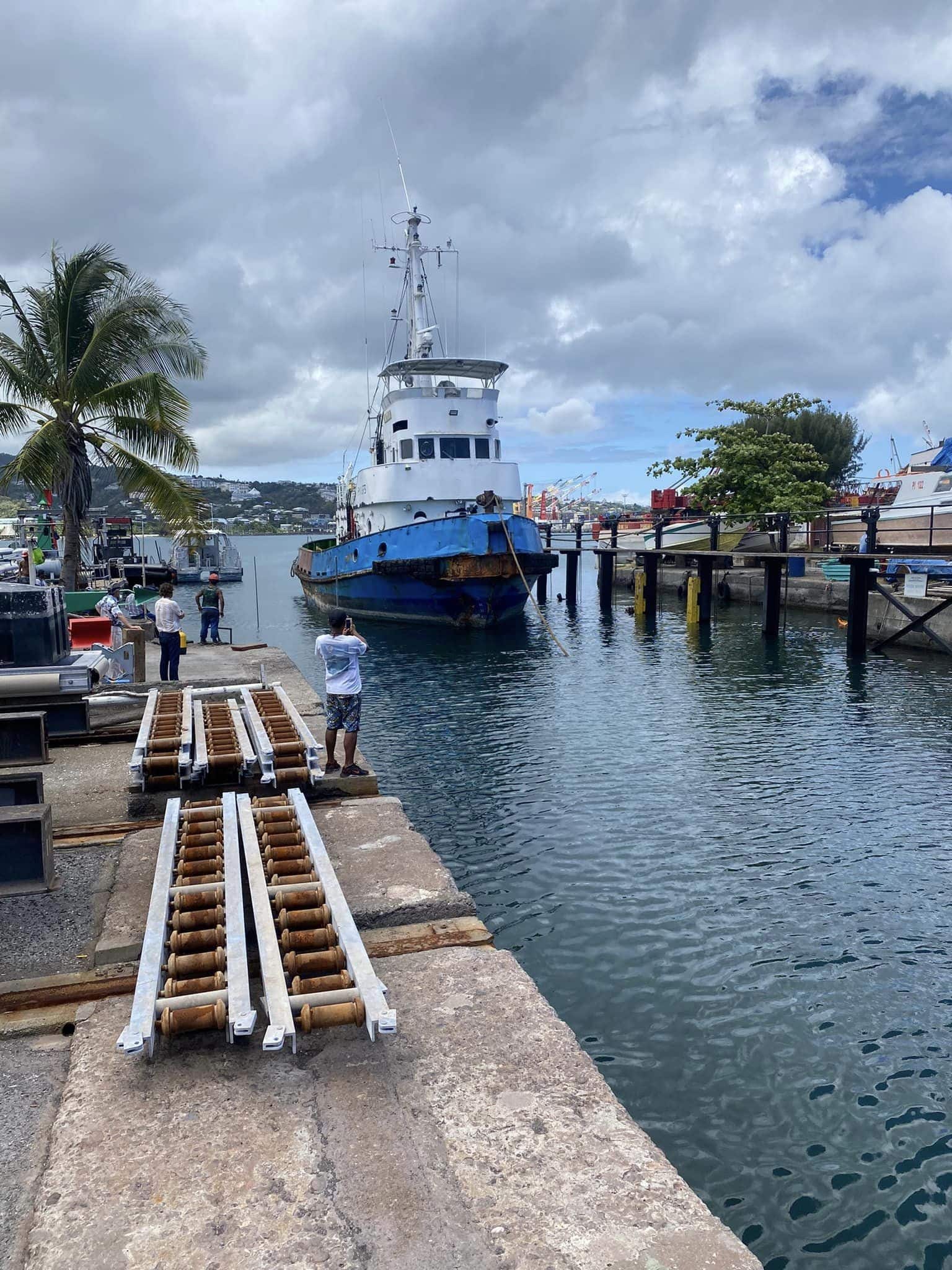
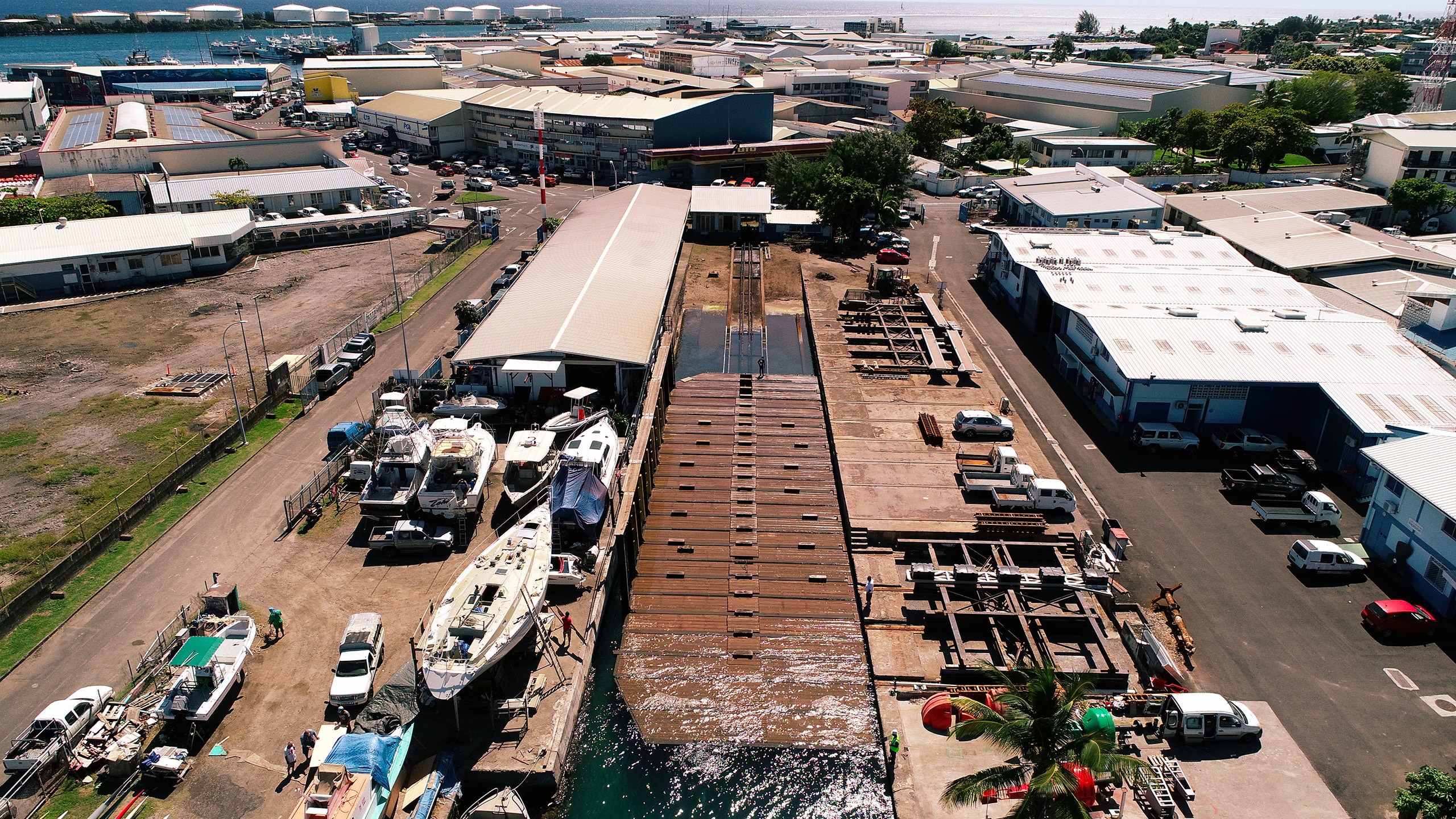
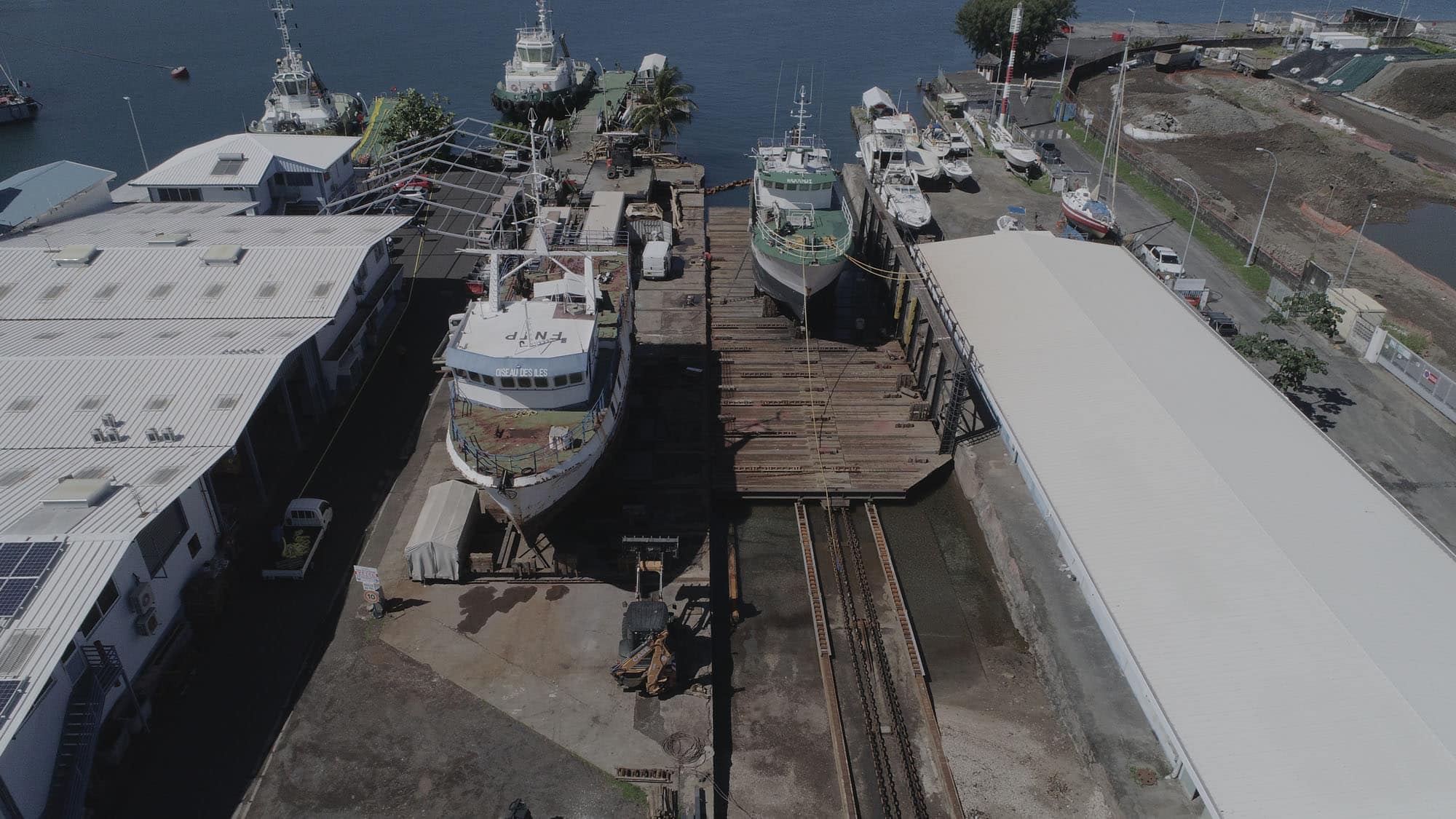
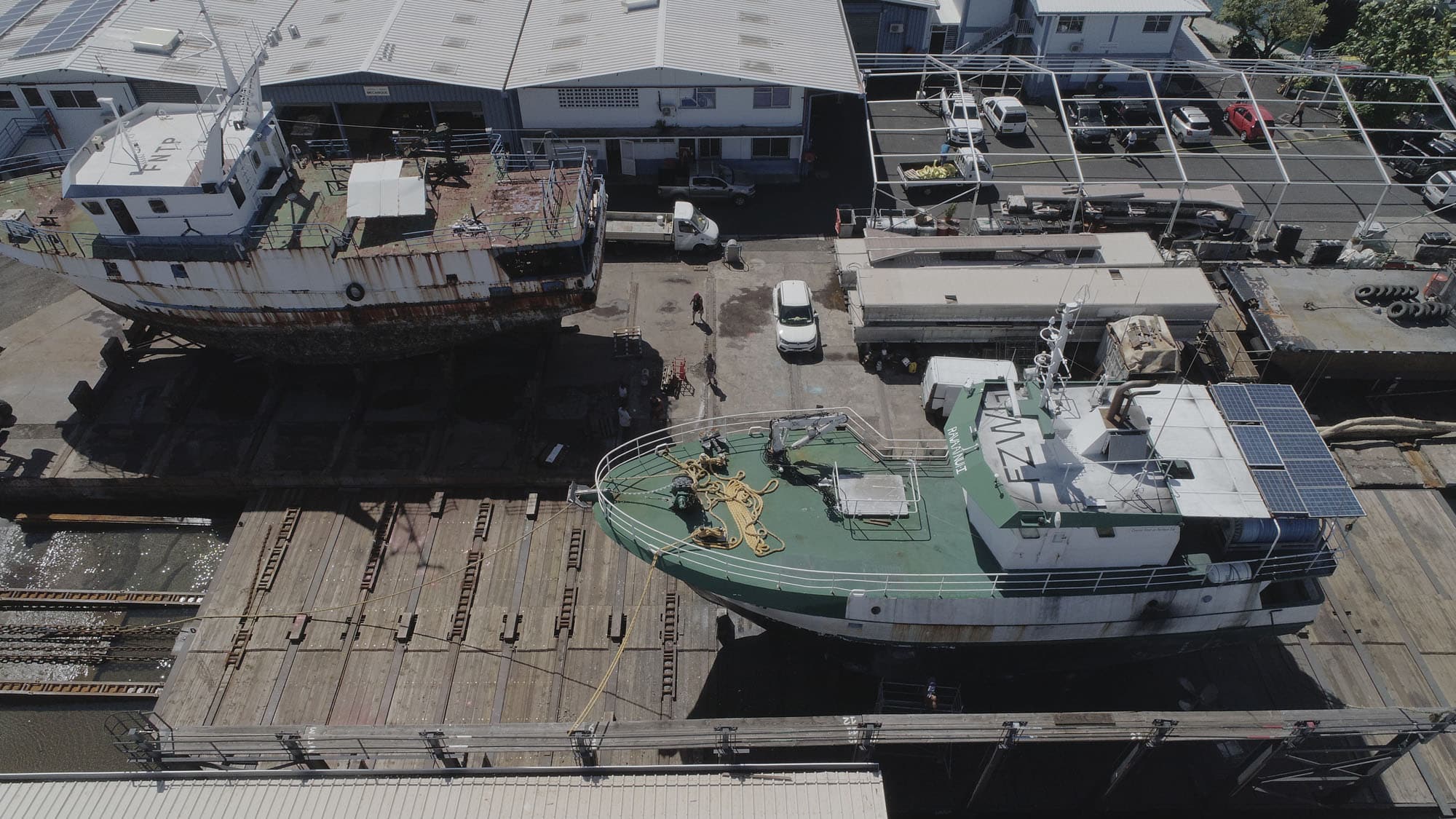
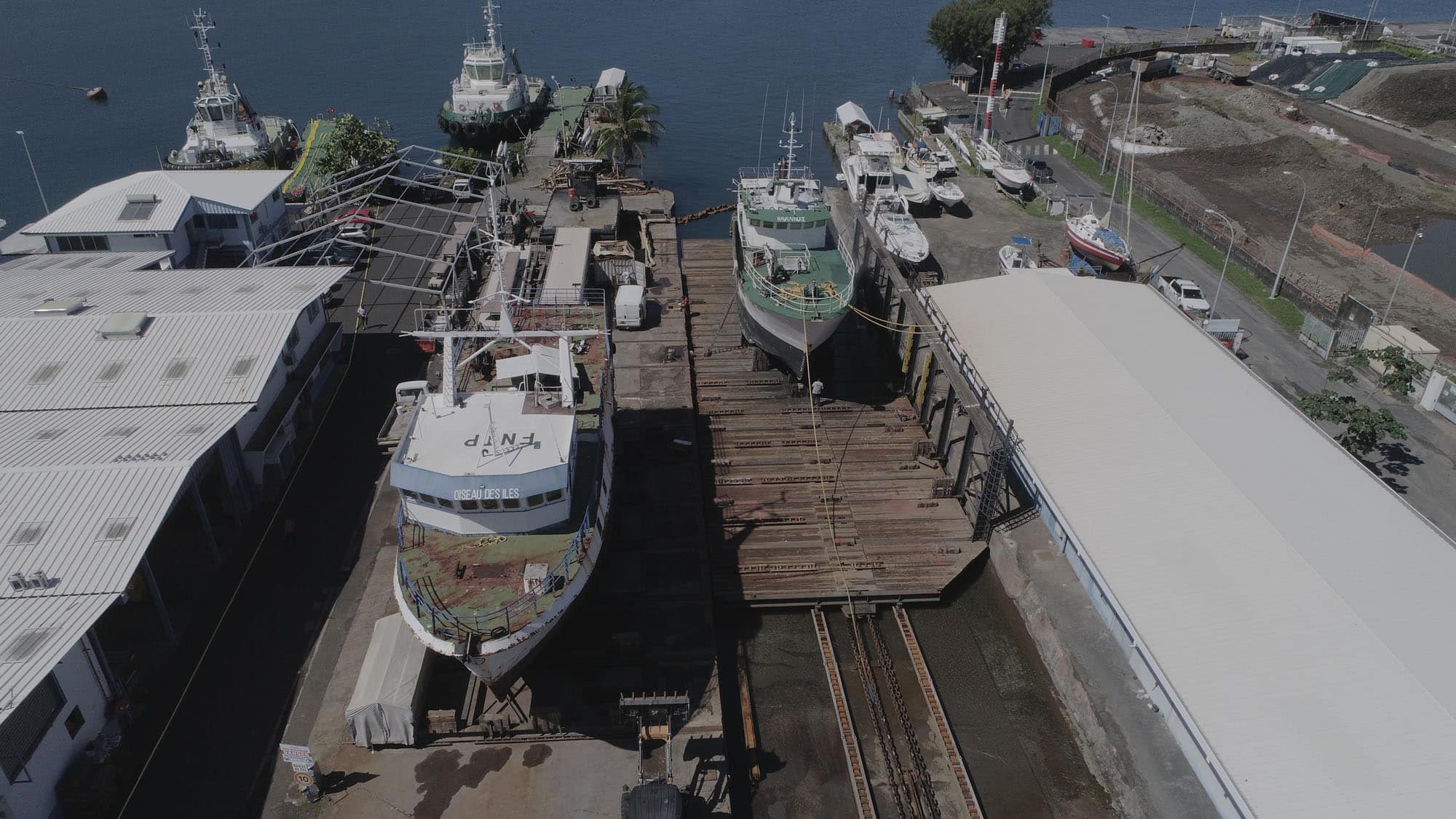
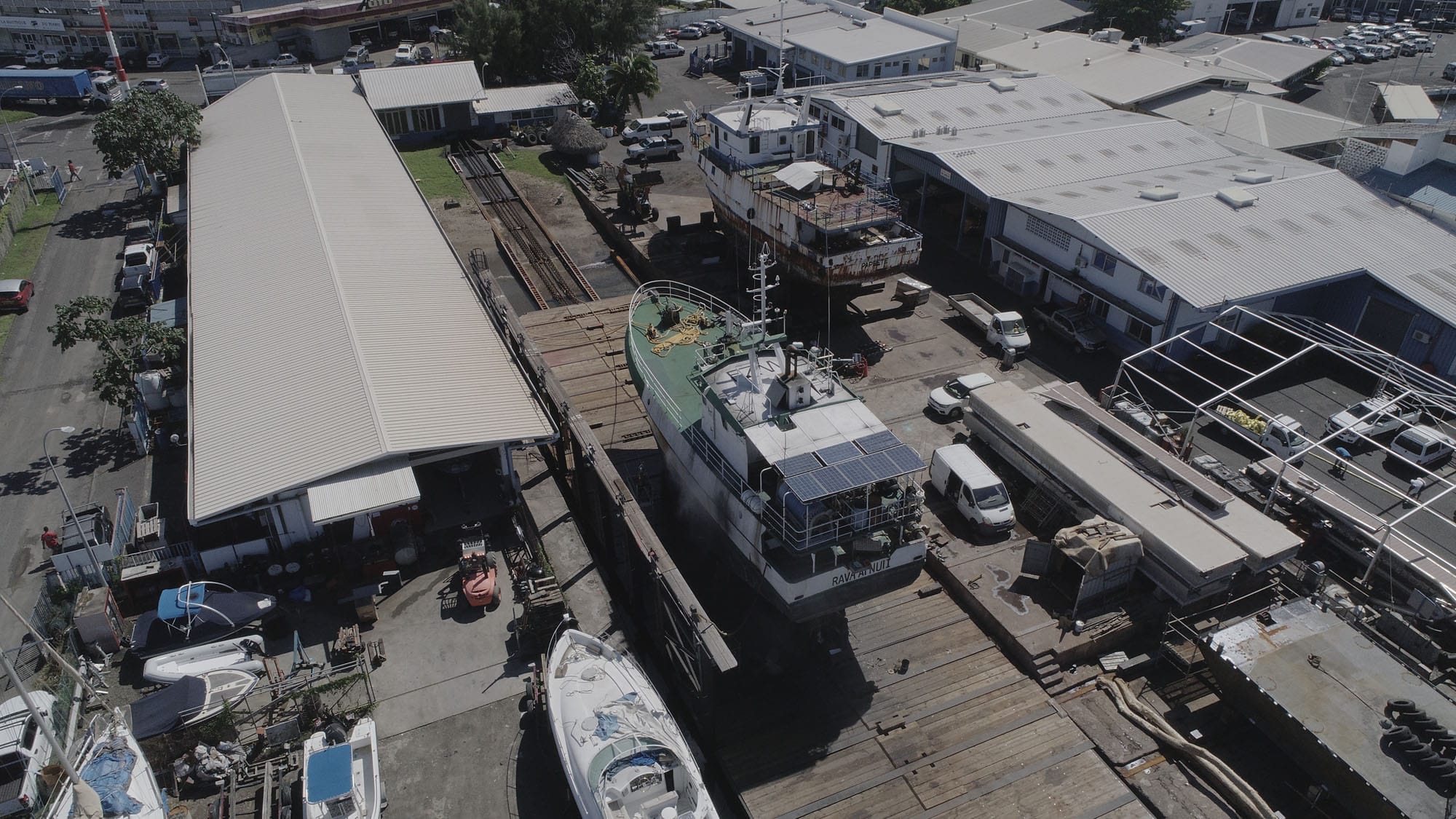
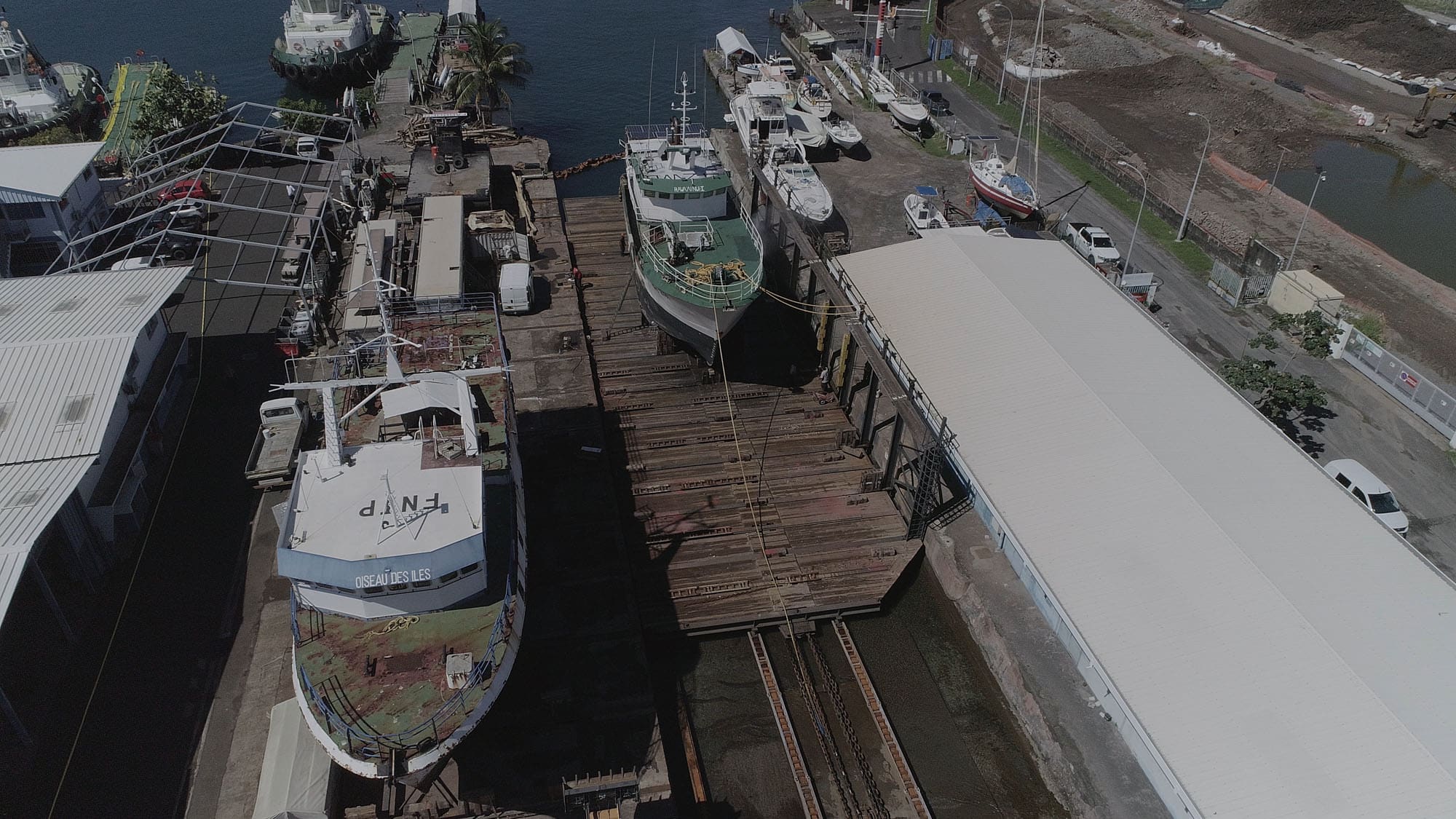
Designed to meet the operational needs of local professional fleets – inter-island transport, maritime services, fishing, and port activities – the slipway offers lifting capacity adapted to the diversity of vessels that use it. Its main cradle can lift ships up to 800 tons, while two transfer cradles, with capacities of 450 and 200 tons respectively, ensure flexible and controlled movement on the technical platform. For medium-sized vessels, several private shipyards supplement the system with lifting equipment ranging from 75 to 300 tons. Larger vessels can utilize the French Navy's floating dock, which can accommodate ships up to 3,800 tons.
Beyond its technical specifications, the slipway is part of a demanding approach to performance and safety. Its operation takes into account the constraints specific to Polynesian geography, tropical climatic conditions, and environmental requirements related to dry-docking operations. Maintenance, upkeep, or repair work carried out on site is subject to a berthing fee, and shipowners can access additional services such as electricity, water, or compressed air, depending on the nature of the scheduled work.
Due to the high demand placed on the infrastructure throughout the year, dry-docking operations must be booked well in advance, in coordination with the Port services. This organization ensures optimal management of the operational schedule while providing effective support to professionals in the preparation and monitoring of their work.
Thus, through its capacity, versatility and structuring role within the port system, the slipway contributes directly to maintaining the operational readiness of the Polynesian fleet, to navigational safety, to the continuity of maritime activities throughout the territory and to the quality of service provided to users.