A diversity of traffic serving the supply of the territory
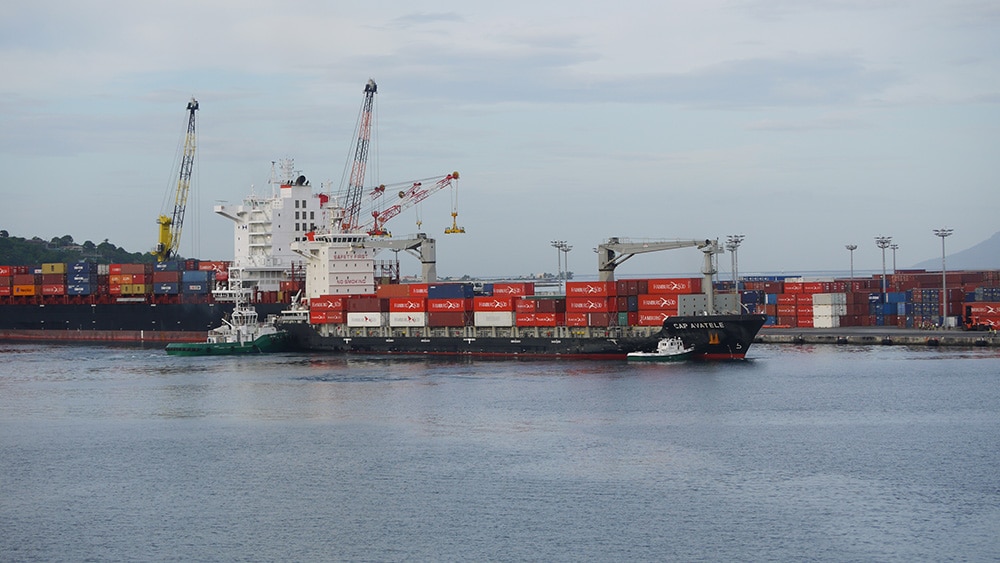
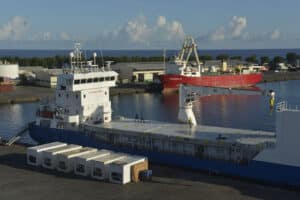
The Port of Papeete handles a wide range of international maritime traffic, reflecting the diverse supply and trade needs of French Polynesia. Container ships, cargo ships, oil tankers, gas carriers, and specialized vessels are processed within a structured operational framework tailored to the specific requirements of each type of traffic.
This organization relies on dedicated infrastructure, specialized equipment and close coordination between the various port stakeholders.
Through the complementarity of these flows, the port ensures the continuity of the territory's external trade, supports economic activity and guarantees the regular delivery of goods essential to the life of the country.
The Port of Papeete handles a wide range of international maritime traffic, reflecting the diverse supply and trade needs of French Polynesia. Container ships, cargo ships, oil tankers, gas carriers, and specialized vessels are processed within a structured operational framework tailored to the specific requirements of each type of traffic.
This organization relies on dedicated infrastructure, specialized equipment and close coordination between the various port stakeholders.
Through the complementarity of these flows, the port ensures the continuity of the territory's external trade, supports economic activity and guarantees the regular delivery of goods essential to the life of the country.
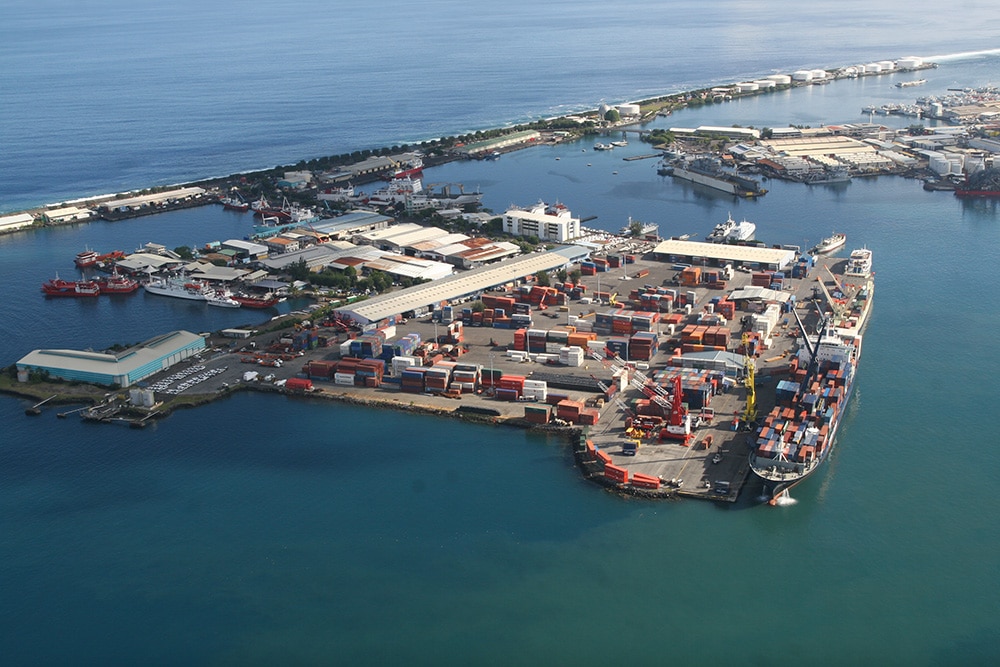
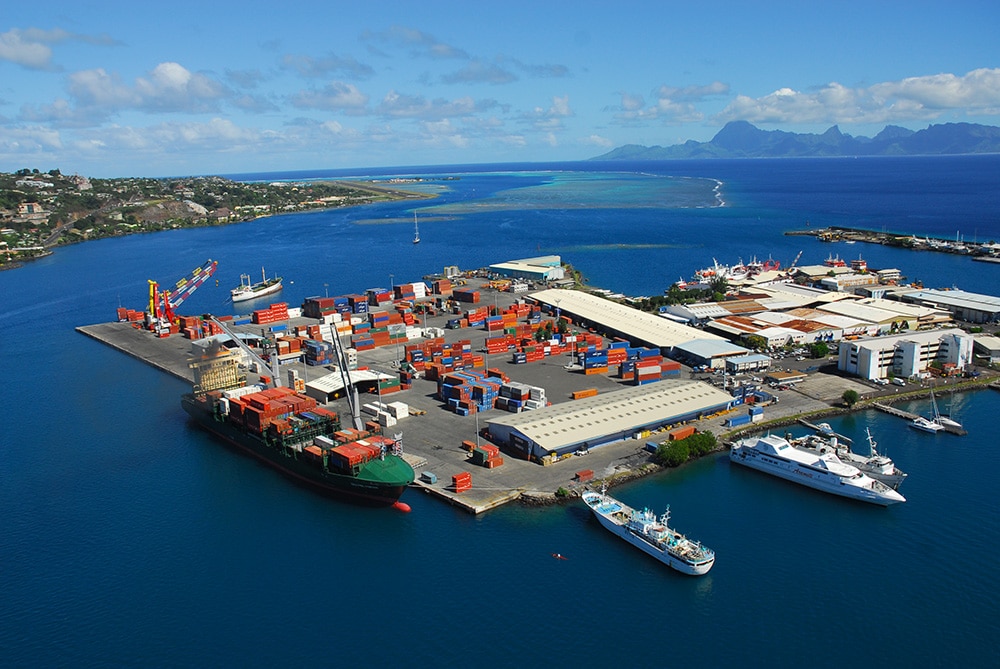
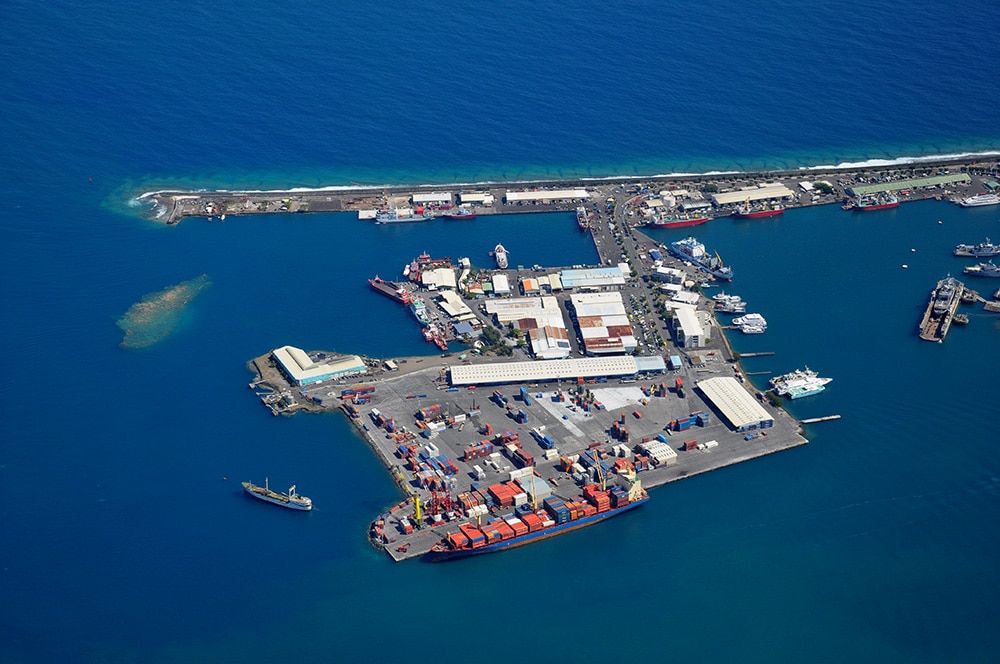
To date, the Port of Papeete is the only international port in French Polynesia, open to trade with the rest of the world and serving all the Polynesian islands. Each year, 90 million tons of imported goods pass through the port facilities of Papeete, and thousands of tons are shipped out to the islands.
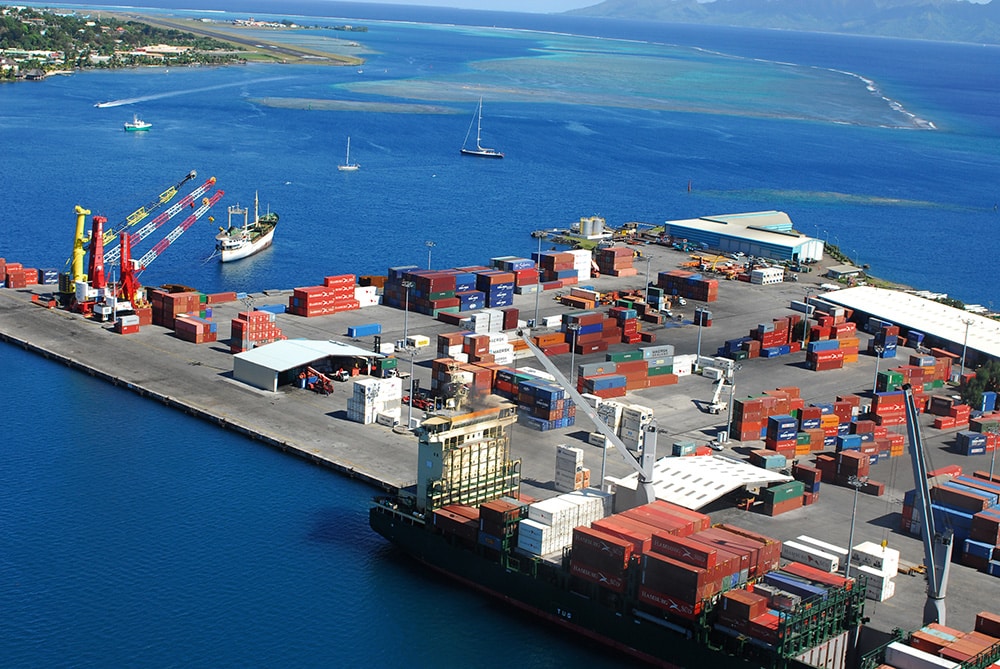
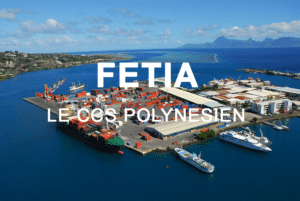
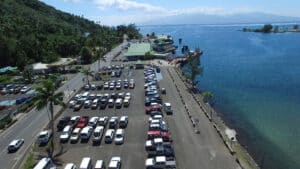
These facilities include over 3,000 meters of quays and pontoons, including a 453-meter deep-sea quay with three berths for container ships and cargo vessels. In parallel, a 140,000 m² container terminal allows for the storage of bulk cargo and 20- to 40-foot containers for international traffic. To accommodate oil tankers, two berths have been built at Fare Ute and Motu Uta, with a maximum capacity of 45,000 tons. Within the reef zone, there is a berth dedicated to unloading butane gas. Located at the entrance to the Motu Uta customs zone, a vehicle storage building provides four levels of parking for 500 vehicles, freeing up ground space for container handling and storage. A 3,700 m² storage area, adjacent to the building, provides space for heavy or oversized equipment, with a capacity of 130 spaces. Refrigerated containers have a dedicated area at the Motu Uta International Trade Terminal, providing them with a power supply. More than 160 outlets are accessible 24/7.
For stevedoring and dockside handling, several private companies are contracted. These companies have modern equipment that allows for efficient processing during ship loading and unloading operations.

Commercial vessels transiting through the facilities of the Port of Papeete are subject to certain fees:
Dock rights Goods transiting through the port facilities of Papeete are subject to wharfage fees, which are levied in exchange for the use of the wharves and reclaimed land for the unloading, loading, and transshipment of goods. These fees are proportional to the tonnage of the bulk goods handled or the size of the containers used for their transport. Only essential goods listed in Decree No. 621/CM of April 28, 1999, are exempt from wharfage fees.
The clutter Any equipment deposited at the Motu Uta international trade terminal that was used for the transport or packaging of goods benefits from a grace period starting from the date of return to the trade terminal. After this period, the owner of these items will be required to pay the "overcrowding" fee to the Port of Papeete.
Shopping Any equipment left at the Motu Uta international trade terminal after unloading or while awaiting loading is subject to a "storage" fee. This fee is proportional to the weight of the goods or the size of the containers, and takes into account the duration of storage at the terminal.
The toll tax The port toll, set by a resolution of the Assembly of French Polynesia, is intended to finance investments in infrastructure construction and equipment renovation that contribute to improving port services. It is levied on goods transiting through the Motu Uta International Trade Terminal and represents 1.251 TP3T of the CIF value of the goods. It is collected by the customs service upon declaration of release for consumption or export of the goods.
The Port Authority of Papeete has been offering the "FETIA One-Stop Shop" service since May 2019. This is a Cargo Community System (CCS) dedicated to managing the flow of goods entering and leaving French Polynesia by sea. Its primary function is to streamline and expedite the port transit of goods.