Discovering Papeete
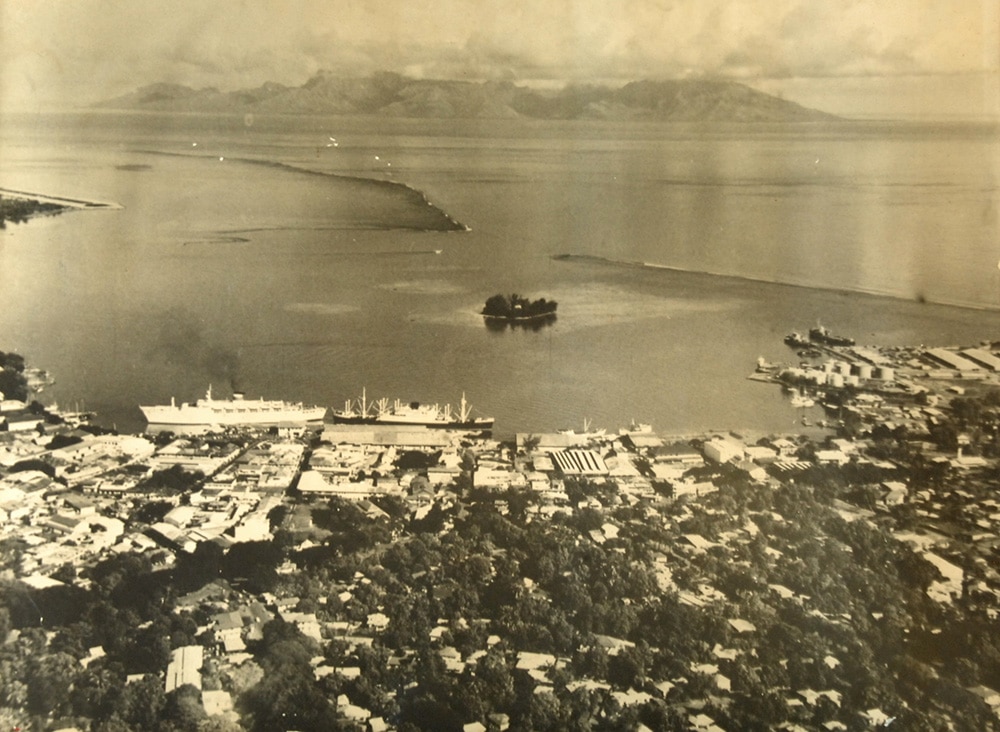
The history of the Autonomous Port of Papeete is closely linked to the economic and maritime development of Tahiti and its archipelagos. From the first organized maritime trade, the site of Papeete established itself as a natural anchor point for navigation and trade, due to its geographical location and its welcoming conditions.
A key milestone was reached on January 5, 1962, with the creation of the Autonomous Port of Papeete. This decision marked the desire to provide the territory with a public establishment dedicated to the management, operation and development of port infrastructure, within a framework of public service and sustainable structuring of maritime activities.
The development of the facilities continued in the following years to meet the evolving needs of the region. This dynamic culminated in the inauguration, on June 29, 1966, of modernized port infrastructure, designed to support the growth of trade, inter-island maritime transport, and the reception of passenger ships.
Over the decades, the Autonomous Port of Papeete has continued to adapt to the changes in the maritime world. The beginning of the 2000s marked a new phase of structuring with the implementation of a master plan covering the period 2000–2009, designed to modernize infrastructure, optimize port organization and anticipate the evolution of uses and flows.
Today, the Port Authority of Papeete continues this historical trajectory, combining heritage, modernization, and a long-term vision. It remains a central player in the maritime sector, attentive to economic, environmental, and territorial issues, serving the maritime and port development of Tahiti and all its archipelagos.
The General Managers of the Autonomous Port of Papeete throughout its history
Martin DELAHAYE
Michel JAROUSSEAU
Alban ELLACOTT
Jean-Patrick BONNETTE
Yves de Montgolfier
Patrick BORDET
Boris PEYTERMANN
Jean-Paul LE CAILL
René Lacroix
Rodrigue LEGAYIC
Boris Leontieff
Ms. Béatrice CHANSIN
Terii VALLAUX
Mario BANNER-MARTIN
Georges PUCHON
A prime trading stopover
With the development of trade, Papeete grew into a small town, then became the religious and political center of Tahiti, and finally the administrative seat of the French protectorate. Admiral Armand Joseph Bruat suggested to the government that Papeete be chosen as the capital.
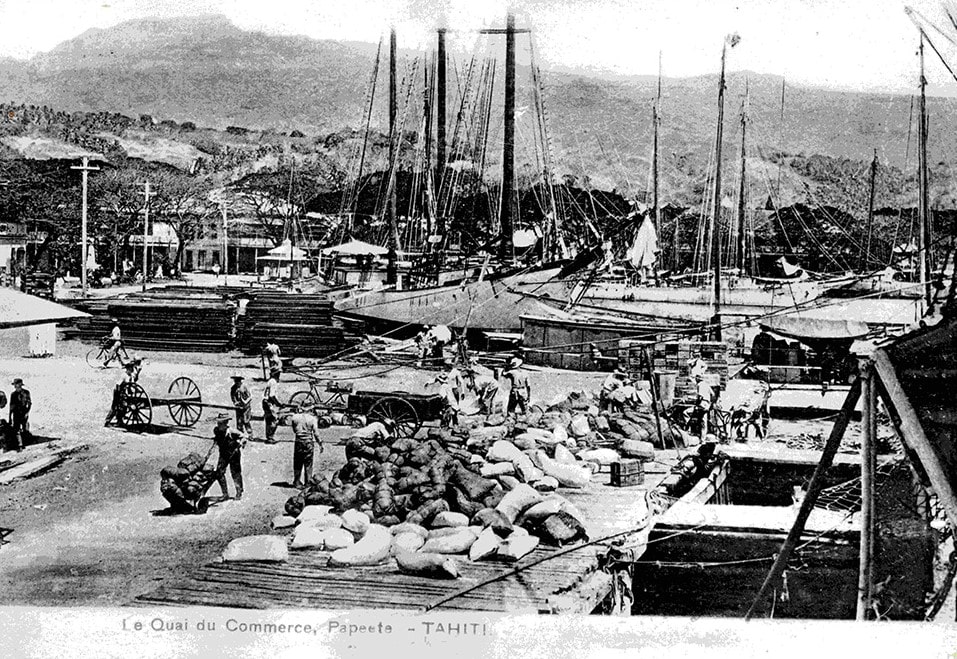
The Port of Papeete quickly established itself as an important port of call, frequented in the mid-19th century by numerous whalers and schooners trading with the islands. To accommodate the increased traffic, various wooden jetties were successively built and then replaced by a masonry quay. Thus, the development of Papeete's port infrastructure spanned 150 years. Captain Rimbeaud of the Corps of Engineers was responsible for the plan of the new city and its buildings constructed around the harbor.
At the end of the 19th century, the first wharf, "Le Quai des Paquebots" (The Steamship Wharf), was built in the heart of Papeete. A local fleet of about ten shipowners then provided transport for goods and passengers between Tahiti and its islands. From 1923, a regular service to Europe was established by the Messageries Maritimes shipping company, via the Panama Canal. To accommodate ocean-going vessels, the Steamship Wharf was enlarged in 1928 and then replaced by the current structure 10 years later. In 1950, it was complemented by the Fare Ute slipway, and then by the commissioning of an oil terminal in 1957.
By the end of the 1950s, the port infrastructure was overwhelmed by the growing traffic in Papeete harbor. Lacking space and resources, the port was on the verge of collapse. But a new era of growth awaited it.
Highlights of the Autonomous Port of Papeete
Creation of the Autonomous Port of Papeete including, in terms of its domain, the area of the Fare Ute hydrocarbon tanks, the parking lot of the Papeete maritime station, the Papeete harbor and the Vaitupa bay
Allocation of the islet of Motu Uta
Extension of the reclaimed land and construction of the port facilities at Motu Uta with protective breakwaters on the reef
Land allocation for the Papeete Maritime Station
Construction of superstructures, hangars and industrial facilities such as the Tahiti Oil Mill
Papeava zone allocation
Landfill site on the eastern reef to accommodate new oil and gas storage facilities
Allocation of the area of today's fishing port
Vaiare Marina Allocation
Port of Vaiare Allocation
Marina Taina allocation
Seafront land reclamation works "The BOUNTY Project", construction of fishing quay no. 2, extension of the Papeava North industrial zone
Development of the port of Vaiare and construction of the Maritime Station
Acquisition of the AITO NUI tugboat
Inauguration of the bonded vehicle storage building
Inauguration of the north jetty of the cruise ship quay in the presence of Mr. Jacques Chirac
Inauguration of the southern breakwater of the cruise ship quay
Commissioning of the extension to the ferry quay and the southern ferry pier
Extension of the Vaiare Marina
Inauguration of the Papeete Maritime Station
The allocation includes Taaone Bay, the Faaa lagoon up to the Taapuna pass, and Phaeton Bay.
Allocation of the Jacques Chirac Square parking lot
Inauguration of the Papeete Marina
Allocation of Cook's Bay and Opunohu Bay
Construction of the new oil terminal (NQP)
Allocation of the TU-MARAMA esplanade
Allocation of the Manihini space (International Cruise Terminal land)
Acquisition of the AITO NUI 2 tugboat
Allocation of the Port and Marina of Uturoa
Inauguration of the new Motu Uta road bridge
Allocation of Place Vaiete
Inauguration of the TU-MARAMA esplanade
Inauguration of the fishermen's dock at the Uturoa marina
Inauguration of the Motu Uta Promenade
Inauguration of the Papeava Quay
Celebrations for the 60th anniversary of the Autonomous Port of Papeete
Official launch of the FETIA one-stop shop system
Inauguration of the TE ANUANUA - INTERNATIONAL CRUISE TERMINAL
It wasn't until the inauguration of Tahiti-Faa'a Airport and the arrival of the Pacific Experimentation Center (CEP) in 1962 that French Polynesia truly emerged from its isolation. Indeed, the decision to locate the CEP on Moruroa and the military authorities' need for a fully equipped naval base in Tahiti were the driving forces behind the territory's economic growth and the current expansion of the Port of Papeete.
The public establishment "Port Autonome de Papeete" was created on January 5, 1962, to address the growth in maritime traffic and to implement major projects: expansion of the naval base, construction of a 2.2 km long and 5 m high breakwater on the reef, and land reclamation of the islet of Motu Uta and the deep-sea quay. This expansion phase lasted nearly four years, culminating in the inauguration of the new Port of Papeete on June 29, 1966, in the presence of General Billotte, then Minister for Overseas Territories. It increased the total length of the quays from 300 to 1,100 meters, the area of reclaimed land from 4,000 to 50,000 m², and the storage areas from 10,000 to 22,500 m². The total cost of the works amounted to 1.086 billion CFP francs, of which 931 million was covered by the State, 55 million by the Territory, and 100 million by the Port Authority of Papeete. Since then, the latter has been continuously expanding. As a result, all usable sites have been used or are currently being used.
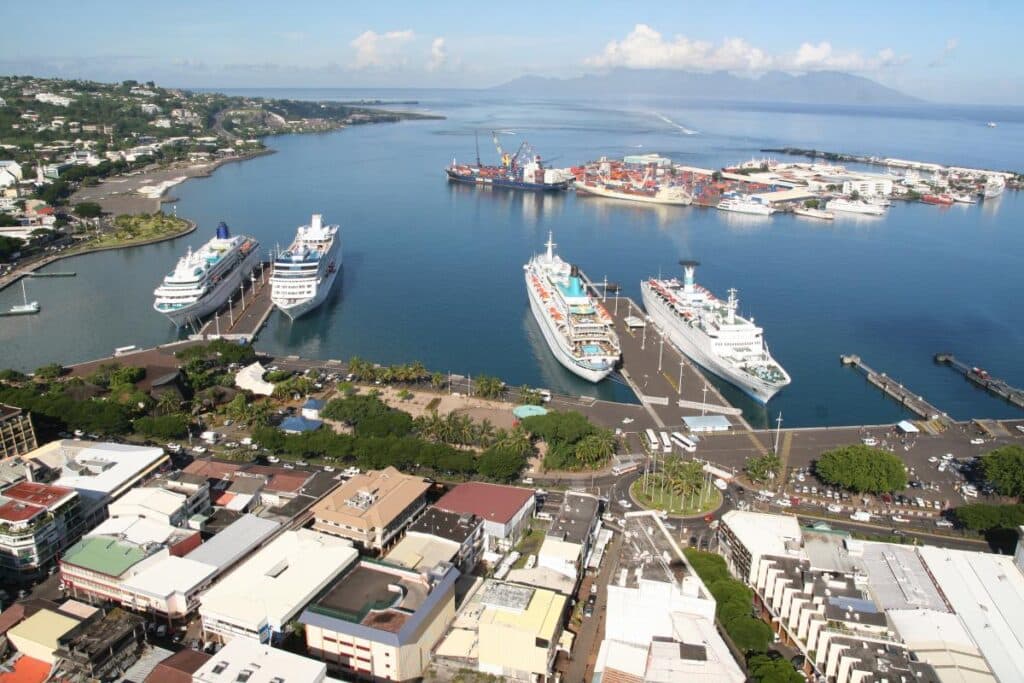
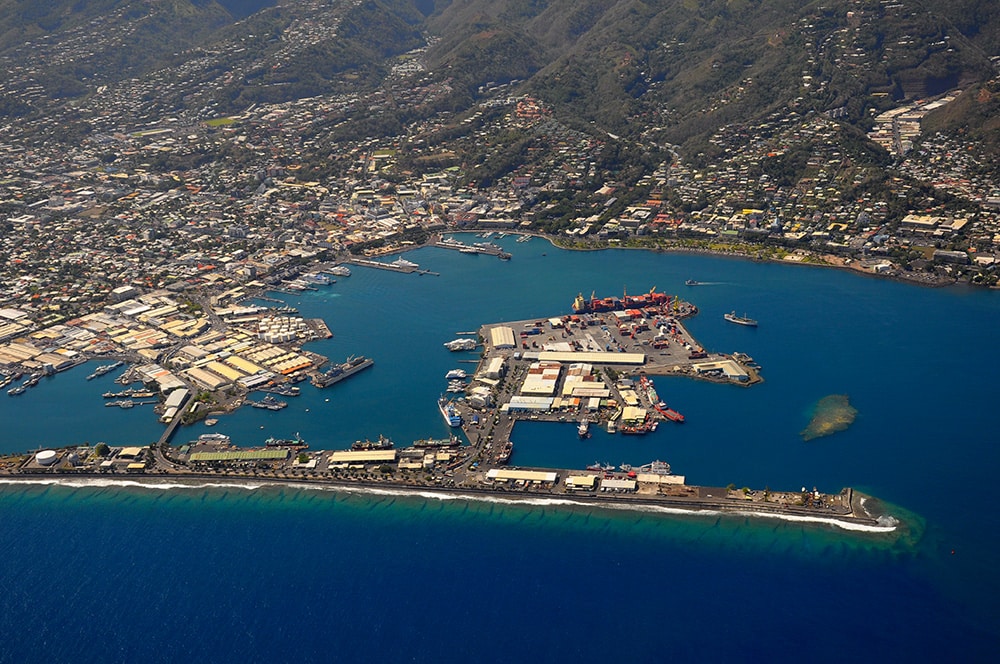
The 2000-2009 master plan, with its 12.4 billion CFA franc investments across 19 projects, enabled the Port of Papeete to acquire modern cruise ship infrastructure and meet the needs of recreational boating, fishing, and international and inter-island trade. The 2010-2019 master plan ushers the port into a new phase of development, aiming to modernize infrastructure to comply with increasingly stringent international safety regulations and adapt it to the major development projects of French Polynesia.